Issue #5 — July 10, 2026
People Will Only Do What You Inspect
For a while I had a mindset.
If a trade was giving me repeated headaches, my knee-jerk reaction was simple:
Fire them.
Hire somebody else.
That usually comes with the caveat of paying more money for the next guy.
Problem solved.
Or so I thought.
Turns out construction isn't quite that simple.
Shocking, I know.
At what price point do mistakes stop happening?
Current Market Conditions
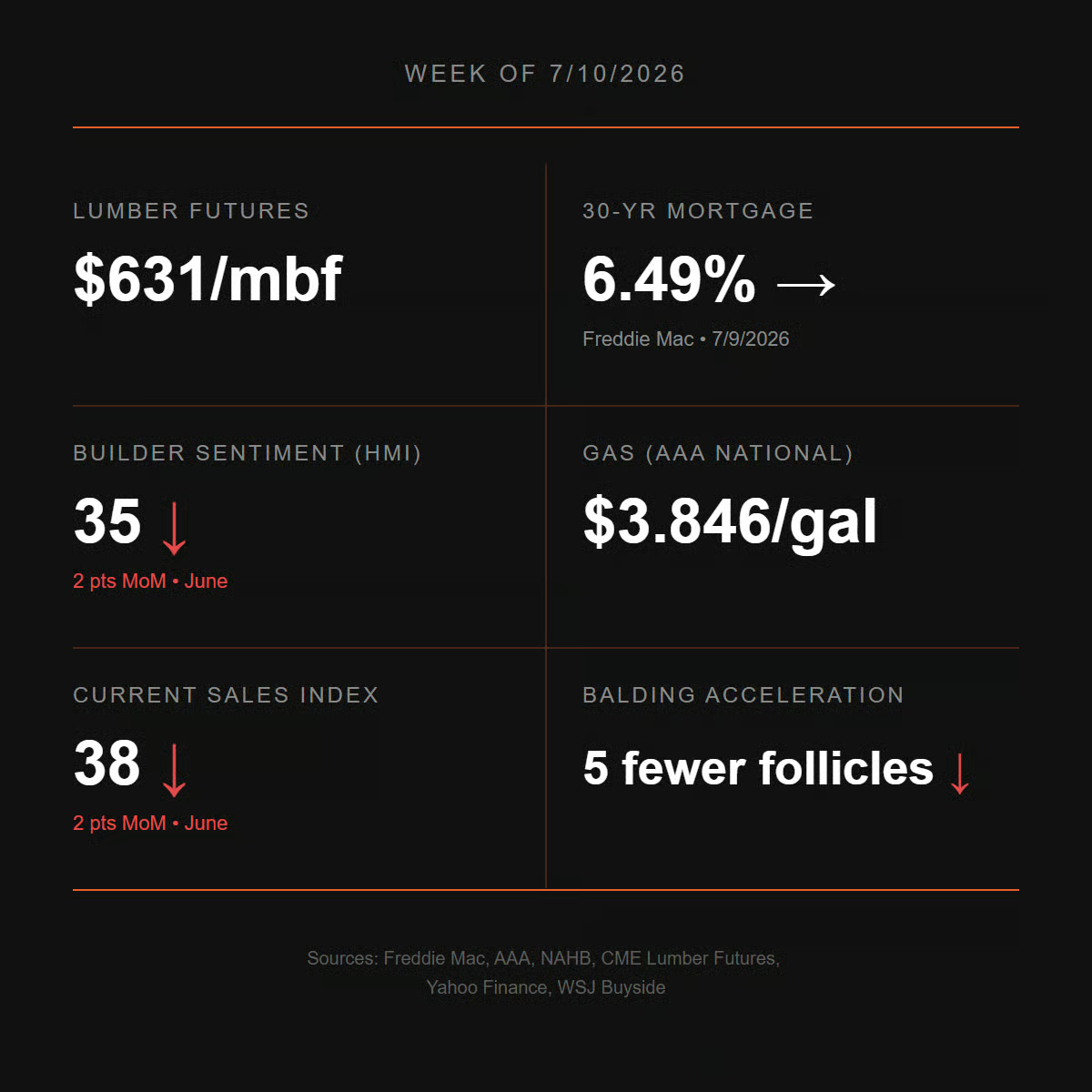
The Good News / Bad News
The Good News: You found the premium guy.
The Bad News: He still misses things.
In the Trenches
I just explained my old philosophy.
If I was frustrated enough — usually after months, if not years, of hearing 'It won't happen again' — with a trade's quality, communication, or timeliness, I'd replace them with the next shiny toy.
The busy guy.
The expensive guy.
The guy everybody swore by.
And honestly?
Things usually got better.
Just not that much better.
And sometimes the new guy didn't have the old guy's problems.
He just had different ones.
The jump in cost rarely matched the jump in quality.
At some point you run headfirst into the law of diminishing returns.
You pay 30% more.
You get 10% better.
And somehow you're standing in the same house having the same conversation six months later.
My boss gave me a piece of advice when I was still pretty green that rings truer every year:
People will only do what you inspect, not expect.
More often than not, the issue isn't effort.
It's systems.
Those trades have crews.
Crew leaders.
Helpers.
New guys.
They're managing people too.
Good systems beat good intentions almost every time.
If a superintendent doesn't have a system for the checks and balances of a project, eventually it becomes a free-for-all.
Walk the houses.
Set expectations.
Follow up.
Verify.
Because eventually you realize something uncomfortable:
You can outsource labor.
You can't outsource management.
There's also something to be said for the relationships you build over the years.
They know how I work.
I know how they work.
I know who's going to call me before a problem becomes a problem.
I know who wants a text and who wants a phone call.
That's valuable.
They know how I work and like things done, and I know them.
I can more often than not, get ahead of the problems because I've come to know certain people's habits.
That's true for any industry in management.
Construction management is still management.
Ours just comes with a little less HR paperwork.
If I fired every trade that frustrated me, I'd be out there framing, plumbing, insulating, hanging drywall, and painting myself.
Nobody wants that.
Especially me.
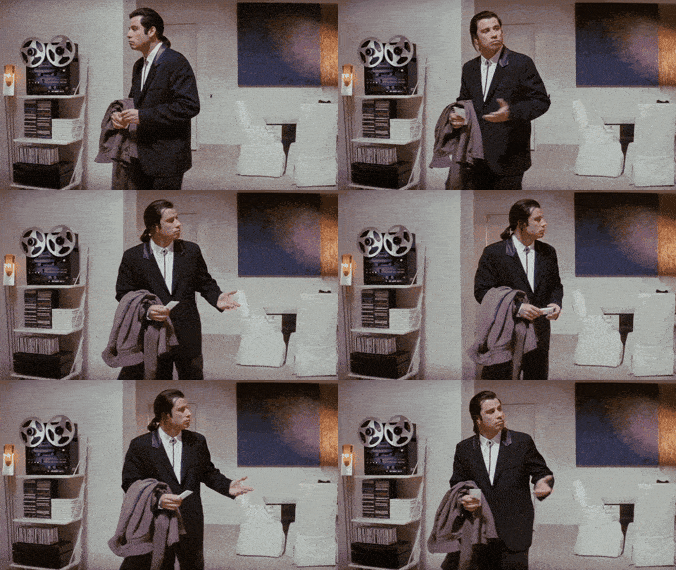
Me trying to build a house all on my own.
Bottom Line
There are absolutely levels to quality.
You usually get what you pay for.
Until eventually...
You don't.
At some point the return curve starts flattening out.
The goal isn't finding perfect trades.
They don't exist.
The goal is building systems that catch imperfect work before homeowners do.
That's the job.
If this was worth the four minutes it took to read, forward it to somebody else dealing with the same jobsite nonsense.
See you next Friday.
Trust is good. Verification pays better.
— David
Frequently Asked Questions
What does "people will only do what you inspect not expect" mean in construction?
It means verbal expectations and good intentions don't hold up on a jobsite. If you're not verifying the work — walking houses, following up, confirming — you're just hoping. Hope is not a quality control system.
Is it worth paying more for premium subcontractors?
Up to a point. You usually get what you pay for, but the return curve flattens. At some threshold you're paying significantly more for marginally better results. The superintendent's inspection system matters more than the sub's price point.
How do you build a quality control system as a residential superintendent?
Walk houses consistently. Set expectations before work starts using written scope of work contracts, not just verbal agreements. Follow up on open items. Verify completion yourself before signing off. The system is the superintendent — it only works if it runs every time.
Why is it hard to replace long-term subcontractors even when they frustrate you?
Because relationships have value that doesn't show up on an invoice. They know how you work. You know their habits. You can get ahead of their problems because you've seen them before. A new sub might be better on paper and worse in practice.
Get the next issue in your inbox.
Jobsite intel, market data, and construction mishaps. Every Friday.