Issue #2 — June 19, 2026
Water Always Wins
Big week.
Hot week.
Quick question before we get into it:
Does a swale that never got cut eventually cut itself?
Asking for a warranty call.
Current Market Conditions
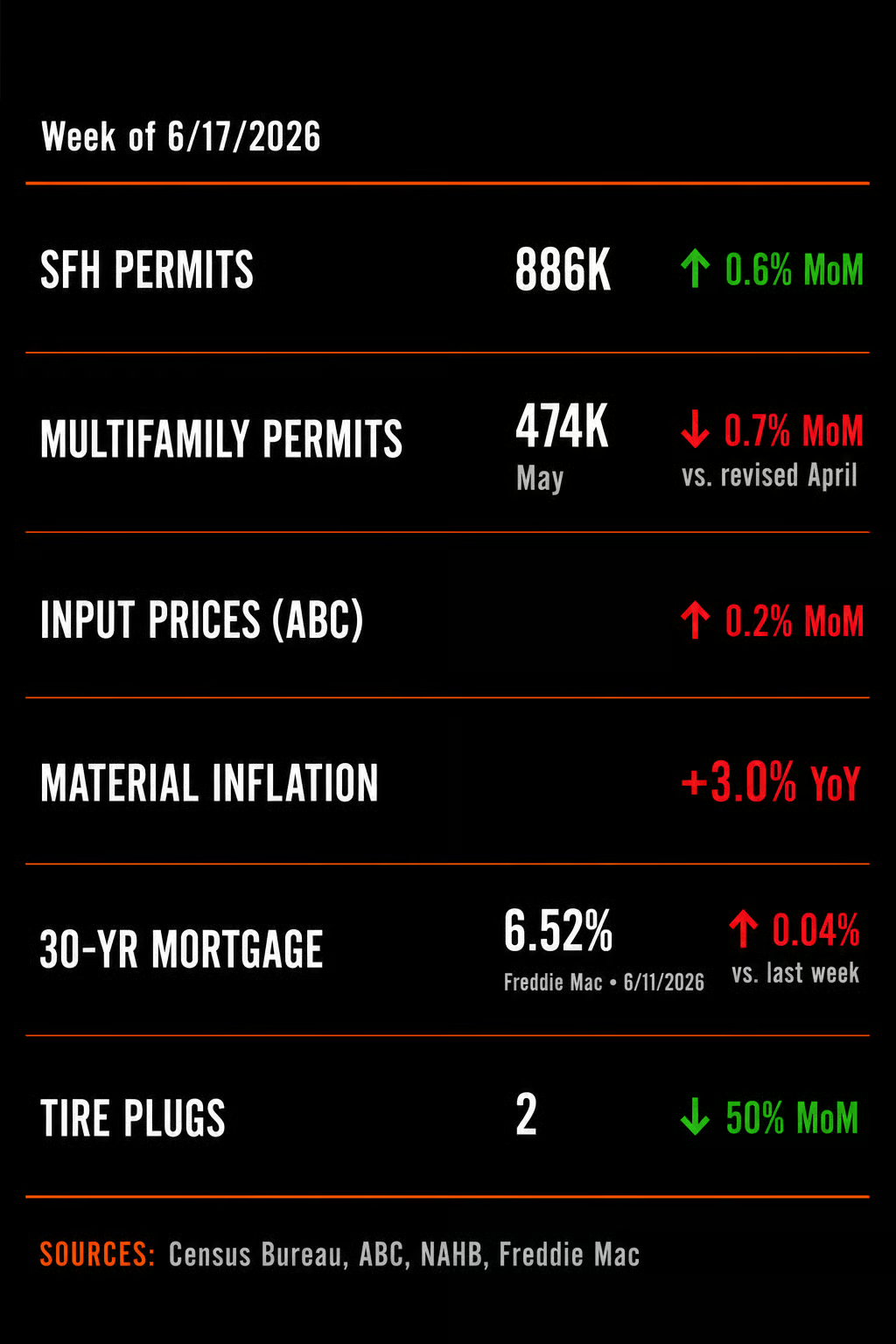
The Good News / Bad News
The Good News: Single-family permits ticked up 0.6% month-over-month to 886K. Small win.
The Bad News: Mortgage rates climbed to 6.52%, up from 6.48% last week. Material costs are still running 3.0% higher year-over-year.
Also, water still follows gravity. Every single time.
In the Trenches
Okay, okay, okay.
Swales.
Don't put your fence posts in them.
But more importantly — make sure your landscaper actually cuts one that's worth the water it's supposed to divert.
You know…not one that gently introduces runoff into the homeowner's backyard where it can puddle up and start its own little ecosystem.
In this case, the homeowner putting fence posts in the swale was definitely part of the problem.
Me not making sure the swale was deeper and actually connected to the front-yard drainage?
That one's on me.
One warranty visit and two full days of my landscaper maneuvering a skid steer around decorative yard gnomes will be permanently burned into my memory.
Moral of the story:
Water always wins.
And apparently so do lawn ornaments.
Who Did This?
This one…
Not me, thankfully.
That's bad, right?
Oh yeah.
Foundation's in. Yard is rough graded. Driveway is poured.
At that point, so many trades have touched the job — grading, concrete, sitework, landscaping — and somehow nobody stopped and said:
'Hey…this doesn't look right.'
Because this definitely does not look right.
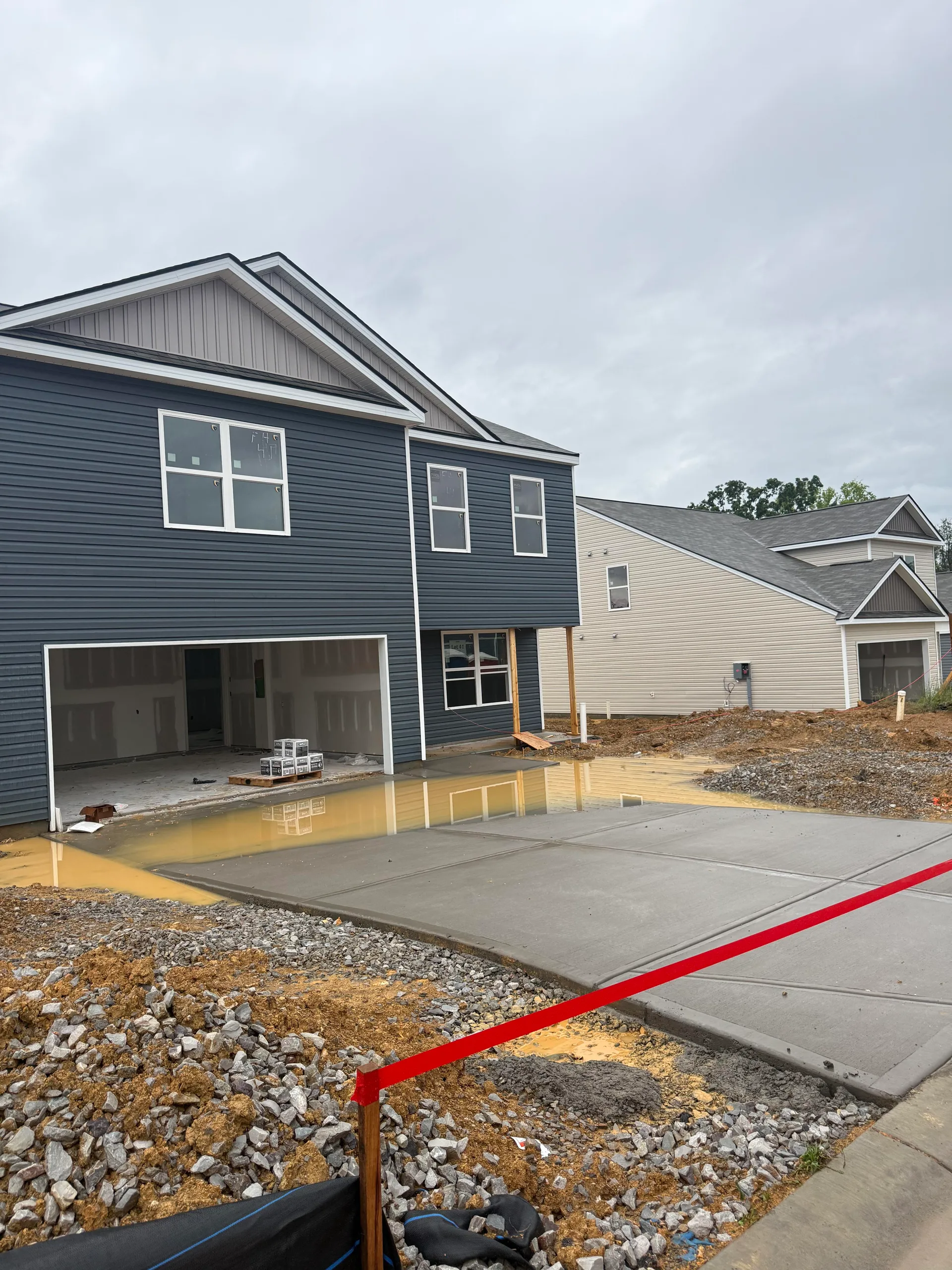
Honestly, this house should've probably been raised another 8 inches. Maybe more.
You need fall away from the house.
Especially when your lot already sits lower than the road and the ditches that are supposed to carry runoff.
Anything is salvageable if you've got enough money and a good concrete saw, I guess.
Code of the Week: Water Still Works
2018 NC Residential Code — R401.3 (Drainage)
The rule is simple:
Surface water has to drain away from the foundation.
The grade has to fall at least 6 inches within the first 10 feet.
If site conditions make that impossible, the code allows drains or swales to move water away from the structure.
Translation:
This is the code that keeps your house from becoming a damp little science experiment.
If the dirt slopes toward the house, water wins eventually.
And when water wins, it usually shows up as crawlspace moisture, settlement issues, wet basements, angry homeowners, or all three at once.
Good news is grading problems are fixable.
Bad news is they're a whole lot cheaper to fix before the driveway gets poured.
Plain English: Water does not care about your intentions.
Cut the swale. Check the grade. Make sure it actually drains somewhere besides the homeowner's backyard.
If this was worth the 5 minutes it took to read, forward it to somebody else!
See you next Friday.
Try not to inherit anybody else's problem before Monday.
— David
Frequently Asked Questions
What is the minimum grade requirement away from a foundation per building code?
IRC R401.3 requires the grade to fall at least 6 inches within the first 10 feet from the foundation. If site conditions make that impossible, drains or swales must carry water away from the structure.
What causes a driveway to flood after construction?
Usually improper lot grading. If the lot sits lower than the road or surrounding drainage, water has nowhere to go. The foundation elevation and rough grade need to account for this before the driveway gets poured.
Who is responsible for grading drainage on a new construction home?
The superintendent is ultimately responsible for verifying grade before concrete gets poured. By the time the driveway is in, fixing a drainage problem gets significantly more expensive.
Can a swale fix a grading problem after construction?
Sometimes. A properly cut and connected swale can redirect surface water away from the structure. But it has to actually drain somewhere — a shallow swale that dead-ends in the backyard just moves the problem.
Get the next issue in your inbox.
Jobsite intel, market data, and construction mishaps. Every Friday.