Issue #4 — July 3, 2026
“We're Basically Done”
'We're basically done.'
Those four words have probably cost residential builders more money than lumber tariffs.
Quick question before we get into it:
At what percentage complete does a house become 'basically done?'
Asking for every superintendent who's ever walked into a 'finished' house sending an amount of problem photos and texts that requires them to upgrade their cloud storage plan.
Current Market Conditions
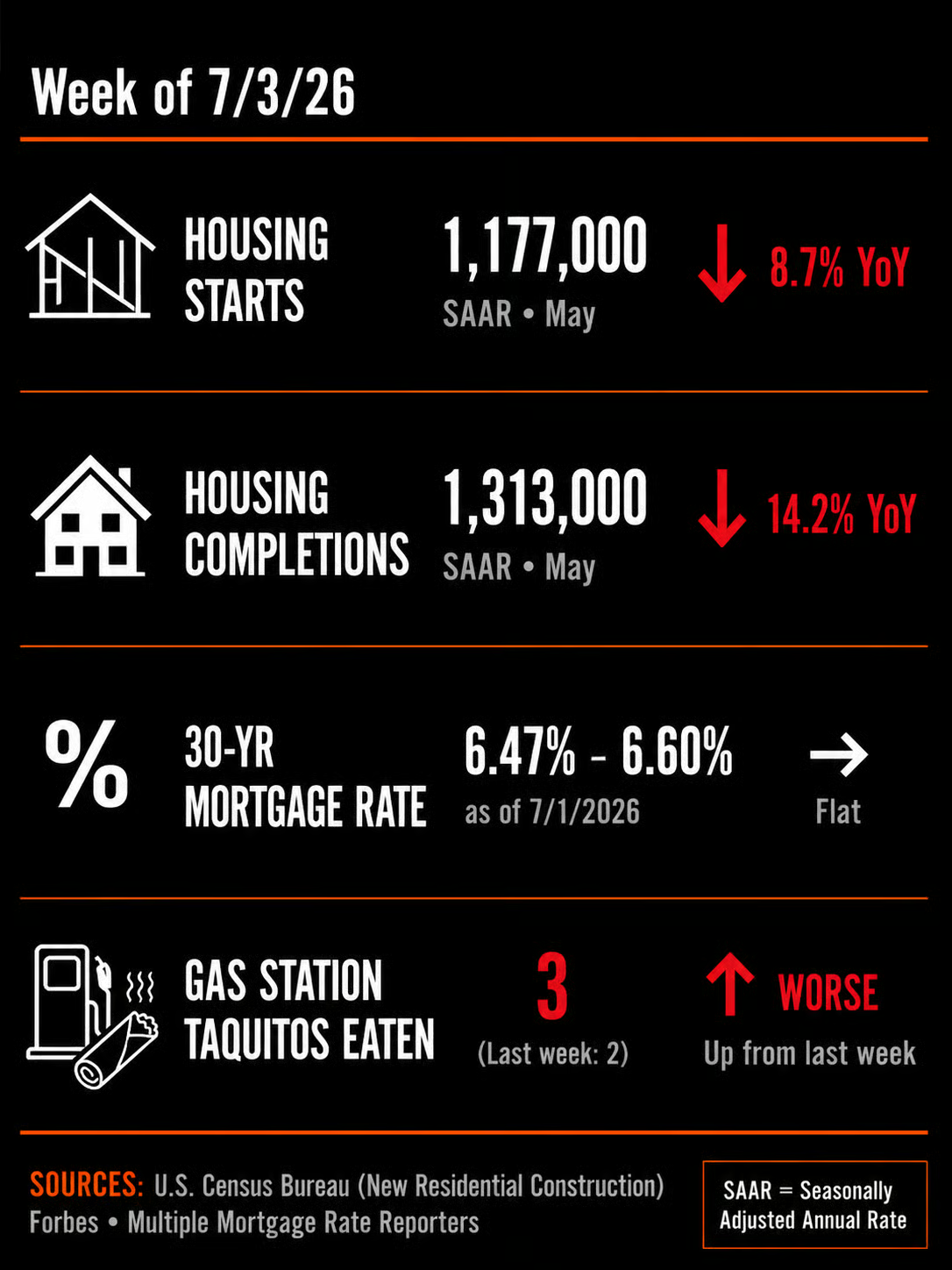
The Good News / Bad News
The Good News: Mortgage rates held relatively steady this week, giving buyers (and builders) at least one thing that didn't get worse.
The Bad News: Housing starts and completions falling year over year, and three gas station taquitos, can all give you heartburn.
In the Trenches
One thing I've learned over the years is that every trade has a different definition of 'done.'
The painter is done.
Except for the touch-ups.
The front door.
The exterior trim.
And that one piece of casing behind the linen closet where apparently spray guns just stop working.
The HVAC guy is done.
Except for installing a white floor register in oak flooring because it 'kind of matched.'
The trim carpenter is done.
Except for...well...the trim.
Nobody is lying.
They're just defining 'done' differently than the superintendent.
To me, done means I can hand the keys to a homeowner without immediately apologizing.
That is the true definition of done.
When I walk a house, I ask myself one simple question:
'If the homeowner moved in tonight, what would they notice first?'
It's amazing how quickly punch items appear after that.
That's how you stop little problems from becoming homeowner phone calls.
Who Did This?
Siding guys were nice enough to caulk for my painter. Credit to their boss who spent 45 minutes getting it cleaned.
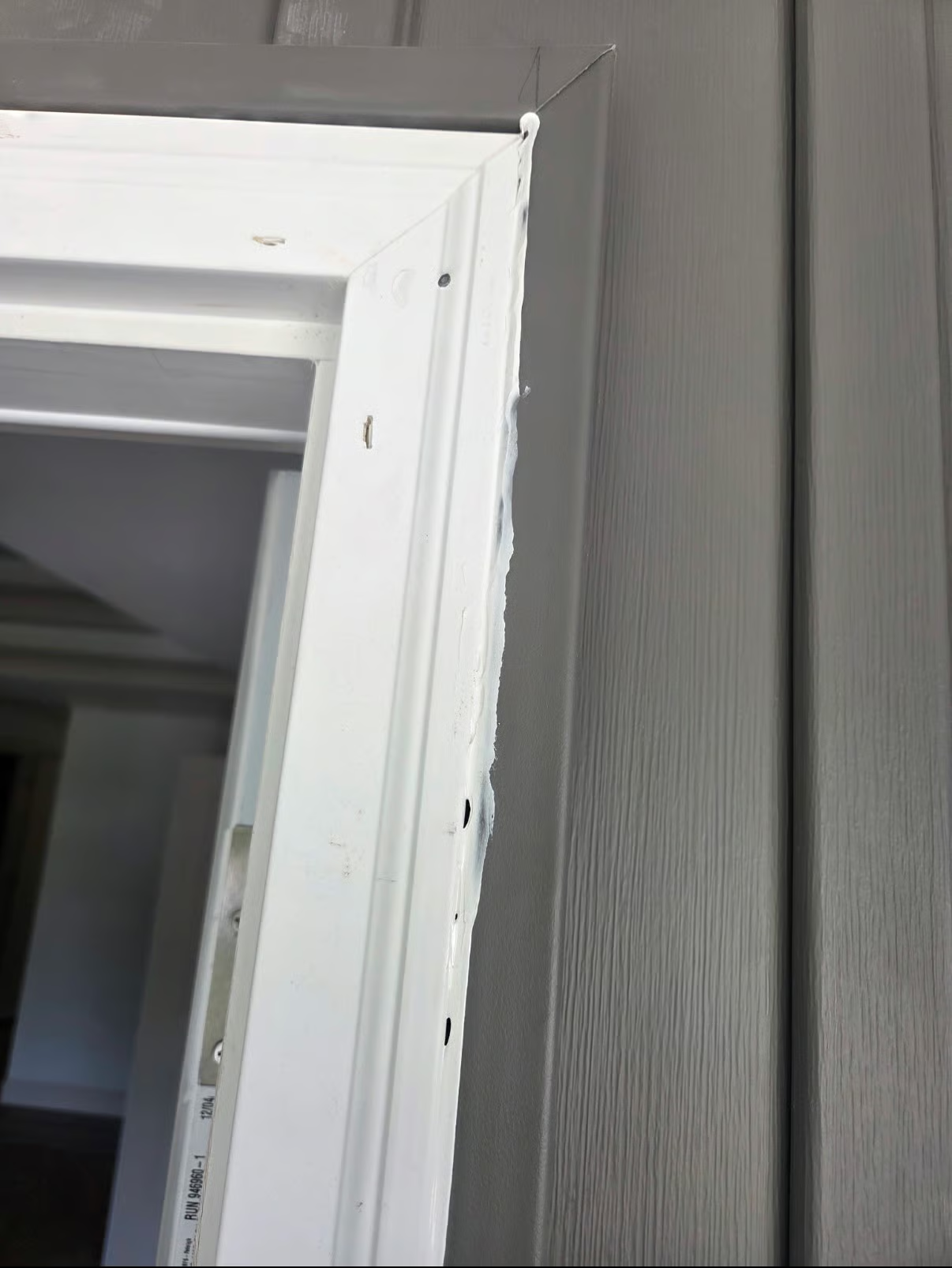
Every superintendent has seen it.
A trade calls and says, 'You can scratch me off.'
Then you walk the house.
You find:
Missing caulk, or too much caulk. Missing outlet cover. Paint on the windows. A door that won't latch. Cabinet ding. Missing handrail bracket. Anchor bolt sticking out of the flooring. You know.
Technically...they were close.
Practically...they were nowhere near done.
There's a big difference between finishing your work and finishing the house.
And before this turns into a 'my subs suck' rant...it isn't.
I love my guys.
Most of them, anyway.
The truth is, they're trying to make a living just like the rest of us. Nobody wakes up hoping they'll forget a piece of trim or miss a paint touch-up.
And to throw a little more honesty into the mix...I'm no rockstar either.
I've forgotten important things.
Lumber orders. Pendant lights.
Ordered way less shoe molding than the job required.
I even forgot to order a freestanding tub once…recently.
Dummy.
That's why we walk every house.
Not because we're looking for mistakes.
Because we're looking for the ones everybody else walked past.
Code of the Week: Guard Rails Should Be Safe
2018 NC Residential Code — R301.5 (Guardrails)
The rule is simple:
Guardrails are required to resist a 200-pound concentrated load applied in any direction at any point along the rail.
Makes total sense, right?
Should be easy to build correctly.
And assuming it wasn't...you'd think it'd be pretty easy to spot.
There are plenty of ways to build a proper guardrail.
Posts can be dropped inside the floor system. Bolted to the outside of the framing. Braced with structural blocking.
Different methods. Same goal.
It shouldn't move.
Well...years ago — and yes, another story where I'm the idiot — I learned that lesson the hard way.
The head of inspections had my final that afternoon.
I showed up a few minutes late, so he was nice enough to walk me through the handful of corrections.
Nothing major.
Then he walked onto the back deck.
Stopped.
Looked at me.
Reached out with one finger...
...and pushed my 'life-saving' guardrail straight over into the freshly graded backyard.
One finger.
I should've given my two weeks' notice, and moved across the country.
To this day, I have no idea how the wind hadn't already knocked that thing over.
I walked past it every day.
Many others walked past it every day.
And somehow nobody (including me) ever grabbed it and gave it a shake.
For the next few weeks, I was what I call the Water Cooler Superintendent.
The one every inspector talks about over coffee.
'You should've seen the guardrail on Lot...'
Not exactly the reputation you're shooting for.
Plain English: Check the obvious.
It's usually the problems hiding in plain sight that end up embarrassing you the most.
If this was worth the 5 minutes it took to read, forward it to somebody else!
See you next Friday.
Happy 4th of July everyone.
— David
Frequently Asked Questions
Why do trades and superintendents disagree on when a house is done?
Because they're measuring different things. A trade is done when their scope is complete. A superintendent is done when a homeowner can move in without immediately finding a problem. Those two definitions rarely match.
What does IRC R301.5 require for guardrails?
Guardrails must resist a 200-pound concentrated load applied in any direction at any point along the rail. The connection method matters less than the result. It should not move.
What is the best way to find punch list items before a homeowner does?
Walk the house and ask yourself one question — if the homeowner moved in tonight, what would they notice first? It reframes the walk from a checklist exercise to a homeowner experience exercise. Punch items appear fast.
How do you manage subcontractor quality without replacing everyone?
Build systems instead of just raising expectations. Trades have crews, helpers, and new guys they're managing too. Good systems catch imperfect work before it becomes a homeowner call. Firing and replacing rarely solves the underlying problem.
Get the next issue in your inbox.
Jobsite intel, market data, and construction mishaps. Every Friday.