Issue #14 — September 11, 2026
Check the Things You Dread to Fix
There are some things you check because they're easy.
There are other things you avoid checking because getting a ladder, pulling a string line and climbing into the trusses above the second floor sounds like a problem for tomorrow.
'I'm sure it's fine.'
Famous last words.
Jobsite Conditions
🪜 6 — Times I Moved the Same Ladder Without Using It.
☀️ 2 — Attics Entered After Noon.
📱 3 — People Contacted About One Wavy Gable.
The Good News / Bad News
The Good News: It can be fixed.
The Bad News: We have to figure out what "it" is first.
In the Trenches
Take a look at this picture.
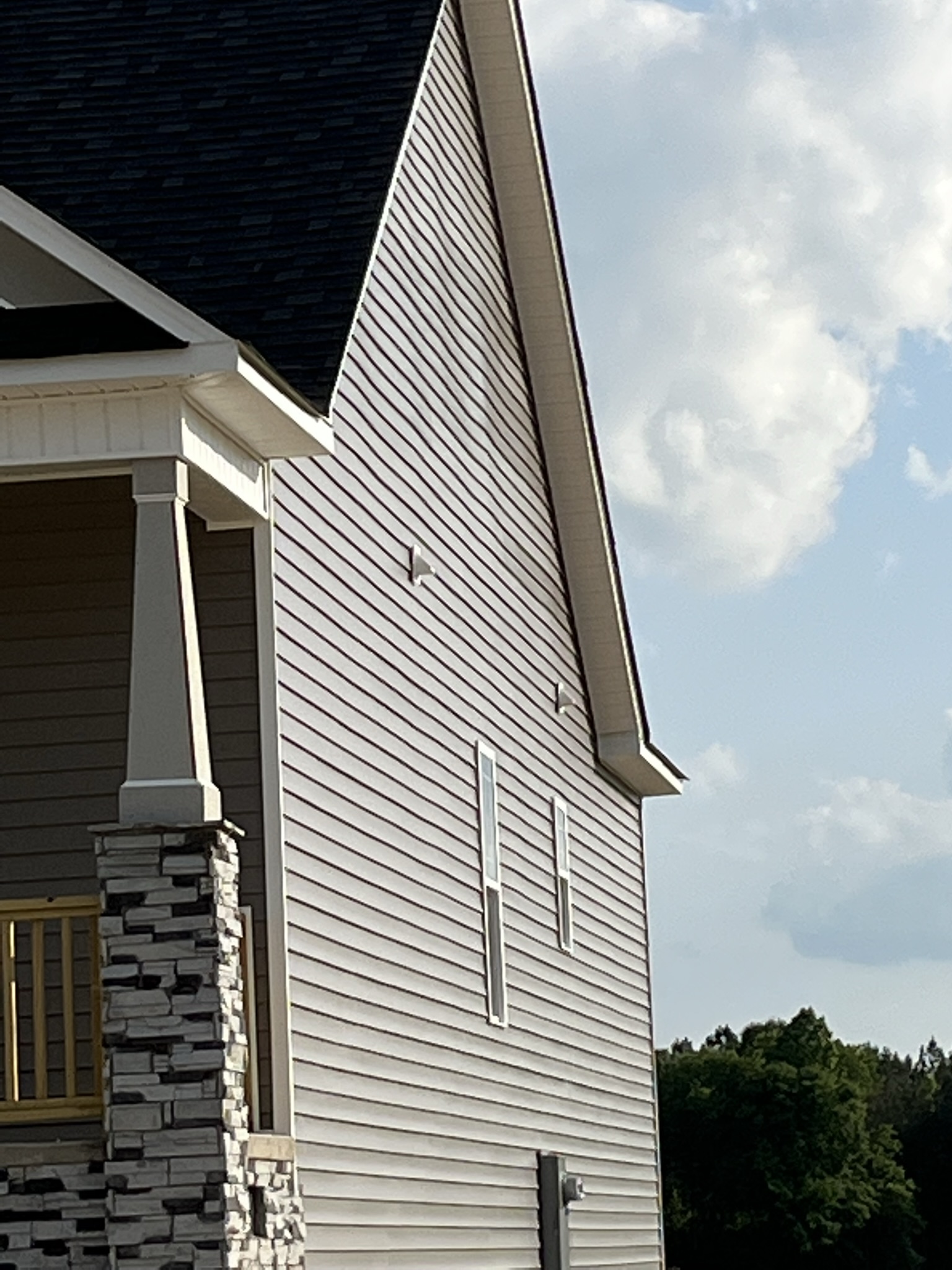
There's clearly something going on with the siding near the top of that gable.
The difficult part is figuring out what.
The funny thing is, this isn't the first time I've encountered something like this.
The first time, the problem was a bowed gable wall. My framer and I climbed into the attic and added bracing to straighten it.
Problem solved.
So when I saw this one, I thought I knew exactly what to do.
We climbed into the attic, re-braced the gable like before and went outside to admire our work.
Better.
But not fixed.
That's when I realized we were probably dealing with a combination of small imperfections that had created one very noticeable (and ugly) gable wall.
The OSB itself could still have a slight bow or bubble effect to it.
The siding could have been nailed too tightly. Vinyl siding needs a little room to move as temperatures change, which is why the fasteners generally aren't driven tightly against the nailing flange.
There could also be a defect in the siding material itself.
Maybe the gable framing developed a bow while it was sitting before installation.
Problems in construction can be very inclusive.
The only way to know for certain is to start taking things apart.
So the afternoon gets a little longer, and a few more phone calls have to be made.
At this point, assigning blame matters less than getting the problem fixed before it becomes a warranty call.
What I do know is that it would have been easier to diagnose during framing.
I check the interior walls religiously for bowed studs before insulation and drywall.
It takes about fifteen minutes to walk the house, mark the bad studs with paint and add them to the framing punch list.
There's really no excuse not to do it.
A bowed stud that takes a few minutes to correct during framing becomes a drywall problem, a cabinet problem or a trim problem after the house is finished.
Gable walls are a little easier to neglect.
Checking this particular gable means getting a ladder onto the second floor, climbing into the truss system and pulling a string line across the wall.
It's not impossible.
It's just inconvenient enough to think:
'I trust the framers checked it.'
More often than not, they do.
This time is obviously different.
To the framers' credit, there is a world where the lumber bows after installation.
The other problem is that you probably won't notice a small bow by standing on the ground and looking at house wrap.
House wrap hides a lot.
Siding is much better at telling the truth.
Once those long horizontal lines go up and the sunlight hits them from the right direction, every wave becomes a little more obvious.
By then, the easy opportunity to check it is gone.
Now the house is insulated.
The interior is finished.
The siding is installed.
If the wall needs to be straightened, someone has to work from inside the attic and outside the house.
Naturally, the attic access is on the opposite end.
Naturally, this happens during the middle of summer.
And if correcting the framing or sheathing doesn't completely remove the waves, the siding crew has to come back, remove the affected material and reinstall them.
That was pretty much the fix for this.
Fix the bowed gable webs
Fix the bubbled sheathing
Replace the affected siding material
A ladder and a string line don't sound quite as inconvenient anymore.
You can't personally inspect every nail that goes into a house.
That's just reality.
At some point, you have to trust the people doing the work.
But certain problems become exponentially harder once they're covered.
Bowed walls are one of them.
So is missing blocking, load points, hardware, plumbing, wiring and anything else everyone promises is definitely behind the drywall.
Those are the things worth checking before they get covered.
Not because you expect somebody to mess up.
Because if they did, you still have a chance to fix it without involving three more trades and crawling through an attic in July.
The more miserable something will be to repair later, the less willing you should be to assume it's fine now.
Check the things you dread to fix.
Even if that means getting the ladder.
If this was worth the five minutes it took to read, forward it to somebody else.
See you next Friday.
I have to go find a string line.
— David
Frequently Asked Questions
What causes a wavy or bowed gable wall in a finished house?
It's usually several small problems stacking together rather than one obvious cause: a slight bow or bubble in the OSB sheathing, siding nailed too tightly against the nailing flange, a defect in the siding material itself, or gable framing that developed a bow before installation. Any one of those alone might not be noticeable, but combined they can create one very visible wavy wall once siding goes up.
How do you check for bowed studs before drywall goes up?
Walk the house before insulation and drywall, mark bad studs with paint, and add them to the framing punch list. It takes about fifteen minutes and catches a problem while it's still cheap to fix.
How do you fix a bowed gable wall after the siding is already installed?
It requires working from inside the attic and outside the house. The framing or sheathing gets straightened or braced. When working with vinyl siding in these situations, you may need to replace the affected areas.
Get the next issue in your inbox.
Jobsite intel, market data, and construction mishaps. Every Friday.