Issue #11 — August 21, 2026
Decisions, Decisions
There are a lot of different ways to build a house.
And at the same time, it's more or less the same principles.
Solid footing. Solid foundation.
You don't want that thing pretending to be a mobile home.
But once you get past the basics, a lot of decisions come down to picking which problems you want to deal with.
One of those first decisions is what kind of crawlspace are you going to do?
Pick your poison.
Jobsite Conditions
🌧️ 2 — Days I Actually Wished It Would Rain. Be careful what you ask for.
🌊 2 — Lots Washed Out. Three inches in under three hours. Wish granted.
📐 3 — Calls to the Engineer.
🤷 1 — Times I Lost My Drill.
The Good News / Bad News
The Good News: There are multiple ways to build a crawlspace.
The Bad News: Every single one of them has a catch.
In the Trenches
Something that comes up a lot during summer home inspections is moisture in crawlspaces.
Totally understandable. That's their job.
But it's also one of those things where there isn't a perfect answer.
In North Carolina, there are generally three ways to build a crawlspace:
Vented. Closed. Conditioned.
Closed and conditioned are really the same basic idea, just different methods of controlling the moisture.
Vented crawlspaces are the most common in spec housing.
Tried and true. Air flows in, air flows out.
Most cost effective option as well.
But because it's an unconditioned space, whatever humidity is happening outside has a direct effect on what's happening under your house.
Again, it's a tried and true practice.
But the question does get asked.
You see this a lot on homeowner forums or renovations, but it pertains to new construction all the same.
'Well, why not just close the crawlspace?'
Sure. But that comes with a cost.
And while the cost is obviously a factor in anything you build, the maintenance of closed crawlspaces also comes into play.
A closed crawlspace needs a way to control the moisture.
One option is a dehumidifier.
That dehumidifier needs to actually be working to do its job.
How many homeowners do you know who go into their crawlspace a few times a year just to check on things?
Vented, or not, checking under your house is pretty important.
I'll be honest, I've got a closed crawl at my own house and writing this made me realize I haven't checked my dehumidifier in over four months.
What happens when it stops and nobody knows?
Out of sight, out of mind. Until it isn't.
More control over the environment. More components. More cost. More things that need maintenance.
That cost that was spent on upgrading to a closed crawlspace just turned into a potentially major problem if left unchecked.
And then you get into radon.
Naturally occurring. No color, no odor, no taste.
A vented crawlspace isn't a guaranteed radon solution. A house with a vented crawlspace can still pop on a radon inspection. But that is a caveat to think about.
That's why it's generally a good idea to install a radon mitigation pipe in the center of the house before sheetrock goes up.
You may never need it.
But if you do, you've already done the hard part.
It also makes you look that much more professional to the buyer when you have prepared for those kinds of things.
There are no free lunches.
You can solve one problem and create another.
Some options are cheaper.
Some are more energy efficient.
Some require more maintenance.
Some solve one problem while creating another.
You just get to pick your poison.
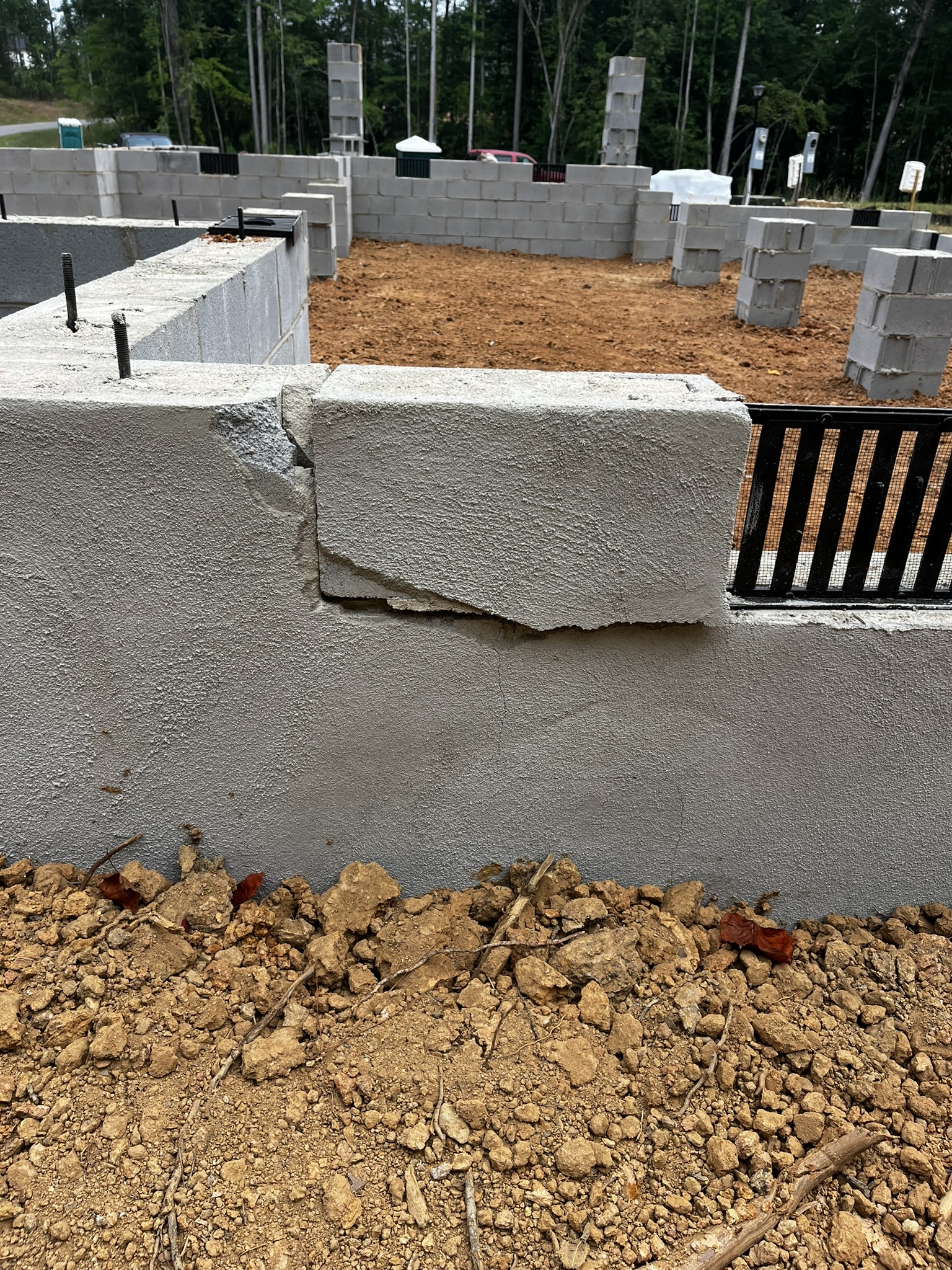
Who Did This?
Just sharing this because it's annoying and funny all at the same time.
And it's an example of a vented crawlspace.
Code of the Week: Get Some Air
Vented crawl (R408):
Net vent area of 1 square foot per 150 square feet of crawl floor. Drops to 1 per 1,500 when an approved ground vapor retarder covers the floor. Vents need cross-ventilation, including one within 3 feet of each corner.
The ratio sounds like a lot until you do the math. It really isn't. On a 2,000 square foot home you're not installing many vents. Don't be shy about going above the minimum for better cross-ventilation.
Closed crawl, dehumidifier option (R409.5.1):
Permanently installed dehumidifier, minimum 15 pints per day, dedicated outlet, condensate drains to daylight or an interior pump.
That's the code minimum. Not a promise that a 15-pint unit handles a 3,000 square foot crawl through an August week in North Carolina. Size the equipment for the actual crawl.
Closed crawl, conditioned-air option (R409.5.2):
Supply air from the home's HVAC system ducted into the crawl at 1 CFM per 30 square feet of crawl floor area. A 1,800 square foot crawl needs 60 CFM of supply air. No return-air duct from the crawlspace back to the system is allowed. A backflow damper on the supply duct is required.
Closed crawl, house air option (R409.5.3):
A continuous-duty fan blows house air into the crawl at 1 CFM per 50 square feet. No return duct allowed.
Closed crawl, exhaust fan option (R409.5.4):
Crawl air exhausted to the outside at 1 CFM per 50 square feet. Continuous-duty fan. No makeup air required.
Bottom Line
There are more options here than most people realize. Pick one, install it correctly, and make sure the homeowner knows to actually check on it once in a while.
If this was worth the 5 minutes it took to read, forward it to somebody else!
See you next Friday.
Six in one hand, and ½ dozen in the other is sometimes a genuine answer.
— David
Frequently Asked Questions
What are the three main ways to build a crawlspace in North Carolina?
Vented, closed, or conditioned. Vented is the most common and cost effective option in spec housing, relying on airflow rather than mechanical control. Closed and conditioned crawlspaces control moisture more directly but require ongoing maintenance, such as a working dehumidifier or ducted air, to actually function as intended.
What does the 2018 NC Residential Code require for a vented crawlspace (R408)?
Net vent area of 1 square foot per 150 square feet of crawl floor, dropping to 1 per 1,500 square feet when an approved ground vapor retarder covers the floor. Vents need cross-ventilation, including one within 3 feet of each corner.
Does a vented crawlspace guarantee protection from radon?
No. A vented crawlspace can still test positive for radon on an inspection. It's generally a good idea to install a radon mitigation pipe in the center of the house before sheetrock goes up, even if it ends up unused, since retrofitting one later is far more disruptive.
Get the next issue in your inbox.
Jobsite intel, market data, and construction mishaps. Every Friday.