Issue #20 — October 23, 2026
Who Throws Away a Basketball Hoop?
Last week, I pulled up to one of my jobs and found a basketball hoop sticking out of my dumpster.
A basketball hoop from what looked like 20 birthdays ago.
Whoever dumped it was nice enough to get the sand out of the base at least.
Current Market Conditions

The Good News / Bad News
The Good News: Framing lumber was down 2.8% from a month earlier, and national gas prices eased in the latest weekly report. Some relief on framing and fuel. Also, NC just suspended its 41-cent-per-gallon motor fuel tax through November 30, 2026.
The Bad News: September mortgage rates averaged 6.86%, up from 6.67% in August, while builder confidence fell three points to 32. Lower lumber prices did not come with better buyer affordability or stronger builder confidence.
In the Trenches
Illegal dumping is one of those things you deal with in residential construction that has absolutely nothing to do with building houses.
Over the years, I've found all kinds of things in dumpsters that didn't come from my jobsites.
I've filed numerous police reports.
I may have even gone digging through somebody's trash, found their address, loaded everything up, and personally delivered it back to their front porch.
Allegedly.
There's something about paying to haul off somebody else's garbage that can really test your patience.
Not only does it cost the builder money.
It costs you time.
You pull up to a jobsite with a dumpster topped off with someone's 1970s La-Z-Boy and a mattress, and now your trades have nowhere to put their debris.
So you have to get it swapped.
Wait for the swap.
Call the local sheriff's office to file a report.
Wait some more.
And depending on the dump, you can't just haul household debris to any landfill.
Meanwhile, the work still needs to get done.
Illegal dumping is just one example of a much bigger problem.
You can't control everything that happens on your jobsites.
You can schedule your trades, communicate expectations, walk your houses, and make sure everyone has what they need.
But you can't physically be everywhere.
And you certainly can't control every decision somebody else makes.
What you can do is make an effort to prevent problems before they happen.
Take dumpsters, for example.
Where you place one matters. Put it right beside a public road, and you've made it convenient for your trades.
You've also made it convenient for the guy cleaning out his garage.
Move it somewhere less accessible to the public, while keeping it usable for your crews and the dumpster company, and you might eliminate some of that temptation.
Position cameras toward incoming and outgoing construction traffic.
Floodlights can help on jobsites where there's a lot of foot traffic.
And put up signs. You should.
Just don't expect everybody to read them.
That's a little too much to ask for.
I've even asked local deputies if they'd consider eating dinner or doing paperwork in subdivisions where I'm building.
A little visible presence can go a long way.
None of these things guarantees anything.
But that's not really the point.
Good jobsite management isn't about preventing every possible problem. It's about reducing the number of problems you have to deal with.
The same thinking applies to material deliveries, jobsite security, scheduling, and inspections.
You identify where things are most likely to go wrong, put reasonable safeguards in place, and adjust when something inevitably slips through.
You won't catch everything.
But you can make it a little harder for things to go wrong in the first place.
Who Did This?
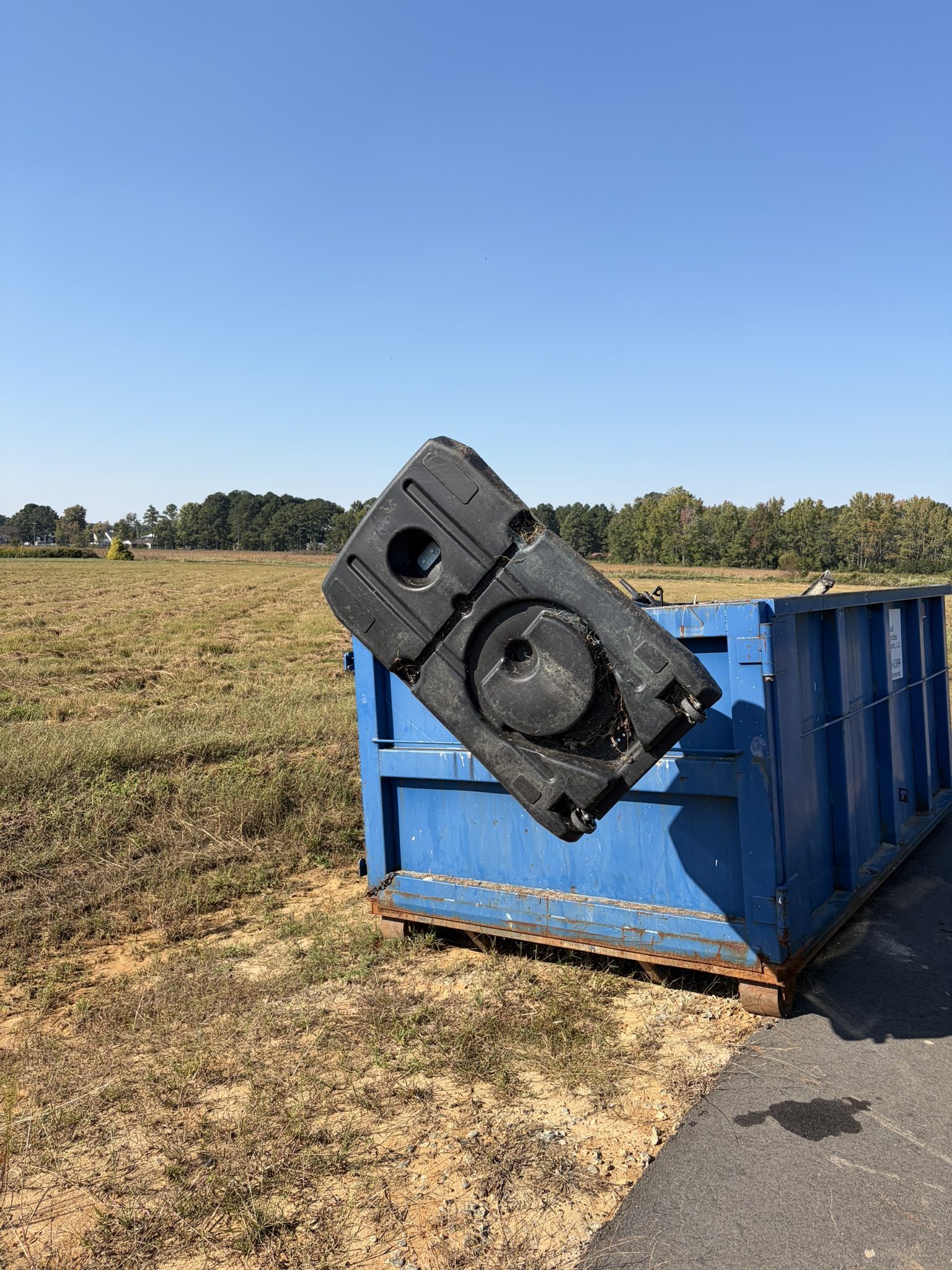
I know who did this.
Someone who didn't want to put their tax dollars to good use and make a trip to the local dump.
My dumpsters are slowly becoming a competitor to Play It Again Sports.
What's the most ridiculous thing you've found dumped on one of your jobsites?
Bottom Line
You can't control everything. Sometimes all you can do is prepare for the worst, deal with what shows up, and wonder why someone throws away an entire basketball hoop.
If this was worth the 5 minutes it took to read, forward it to somebody else!
See you next Friday.
Try not to pull your back dumpster diving.
— David
Frequently Asked Questions
How can a builder reduce illegal dumping in a jobsite dumpster?
You can't eliminate it, but you can make it harder. Place the dumpster somewhere less accessible to the public while keeping it usable for your crews and the dumpster company. Point cameras toward incoming and outgoing construction traffic, add floodlights where there is a lot of foot traffic and put up signs, knowing not everyone will read them. Asking local deputies to do paperwork or eat dinner in the subdivision adds a visible presence too.
What should you do when someone dumps household trash in your construction dumpster?
Get the dumpster swapped, since your trades need somewhere to put their own debris, and call the local sheriff's office to file a report. Expect delays while you wait on the swap and the report. Depending on the dump, household debris can't just be hauled to any landfill, which adds to the headache.
Why does illegal dumping cost a builder more than the disposal fee?
Besides paying to haul off someone else's garbage, it costs time. A dumpster full of someone else's debris leaves your trades with nowhere to put theirs, so you have to arrange a swap, file a report and wait, while the work still needs to get done.
Get the next issue in your inbox.
Jobsite intel, market data, and construction mishaps. Every Friday.